Wednesday, March 30, 2016

What do you know?

You are a modern man or woman, the heir of the wisdom and technical expertise of countless of generations, or are you? Perhaps you really know less than an average hunter gatherer thousands of years ago, or much less than a pioneer did just 150 years ago.

Do you know the names of any of the rivers or streams in your neighborhood. Do you even know where they are, where they flow to?

Do you know how to find fresh clean drinking water or treat dirty water? Do you know how to store it?

Do you know the names of any plants or trees in your area? Which ones are good for eating? Which ones are good for construction? Do you know when to plant or how to harvest any food crops? Do you know how to mill and shape a tree into lumber?

Do you know how to obtain or refine minerals like Copper or Iron; Utzi the Iceman knew about copper 5,000+ years ago.

Could you make a canoe? A boat? If you could, how would you sail? Do you know anything about the stars or navigation?

Do you know how to cut and shape stone? Even something soft like sandstone?

Could you make a clay pot like your ancestors could for thousands of years?

The list goes on and on, of course. If you have any practical knowledge, you are a rare creature, indeed. If you have none, and chances are you don't, what has civilization made you?

Tuesday, March 29, 2016

The Gods and Man

The major gods of the western world today are the disembodied math god and the history god. These are the gods of the Enlightenment. These are gods of the city and their priesthood is technocrats, academics, and pundits. The city, civilization, is a world of lies many degrees removed from nature.

The mind of the man of the city is all pavement and walls. The gods no longer speak to him. There's no hope for freedom or free action when the gods are silent. There's no hope for meaning when understanding is systematic and codified.

As the clockwork universe ideas of the Enlightenment break down, the old gods--personal gods begin to rise again. There were always seven major gods and a multiplicity of others just as there were seven ages of man, seven planets, and seven days of the week. The Sun, Moon, Mars, Mercury, Jupiter, Venus, and Saturn. The Sun and the Moon were the mother and father, the king and the queen. Mars was the warrior, venerated by some and scorned by others. Mercury is the clever intercessor between the realm of the gods (the sunrise and sunset lands) and Earth. Jupiter is a mighty king, the sun at night. Venus, a treacherous beauty. Saturn, a stranger, an old king, a mad king.

The gods could be found in nature. They were nature. Where the Enlightenment science trained biologist looks at a crow and tries to understand it as an instance of one particular brand of animated meat and bone, a seer or a shaman sees it as a brother, or a messenger, a thread in the complex tapestry of the universe.


Monday, March 28, 2016

Real Actual Politics

Cathars Expelled from Carcassonne (1209)
The Albigensian Crusade neatly illustrates how politics, culture, and religion actually work. It was a long campaign to eradicate Gnostic Christianity from southern France in the 13th century. Gnostic Christianity's teachings are almost completely distinct from the teachings of institutional Catholicism. The church ordered it suppressed with force, and the French used the crusade as a pretext to subdue the County of Toulouse.

Religion and religious institutions are really the bedrock of civilizations and nations. Ideas of the good and the rituals that allow people to attempt to influence the universe supersede or are completely intertwined with politics, and supersede commerce and trade. In the post Roman world of Western Europe, the ancient religions of Germanic peoples and the various competitors to Catholic Christianity that were imported to Europe were a threat to the dominion of kings over nations, so they were stamped out with violence or co-opted and blended into the fabric of the catholic religion.

If you're a society hacker, or a person who wants to see large scale change in the world and not just be part of a debating society, it's important to see how ideas translate into change. Religious organizations, mafias, secret societies, or even just fraternal organizations are the building blocks. They are really tribes in a form that's abstracted from blood ties, and in many cases, their belief is really shamanic in character, that is, various members of the societies seek direct contact with the other side. Political organization and action flows from this well spring.

For a would-be society hacker, it's important to understand that any successful religion, that is, anything that might transcend the status of a minor cult must honor all of the gods, rather than obsess on one or two. For example, if you're an anarcho-capitalist, you love Hermes above all other gods to the point of forgetting about them, or if you're a permaculturist, you love the Earth Mother above all other gods--which is probably a totally reasonable choice.

Sunday, March 27, 2016

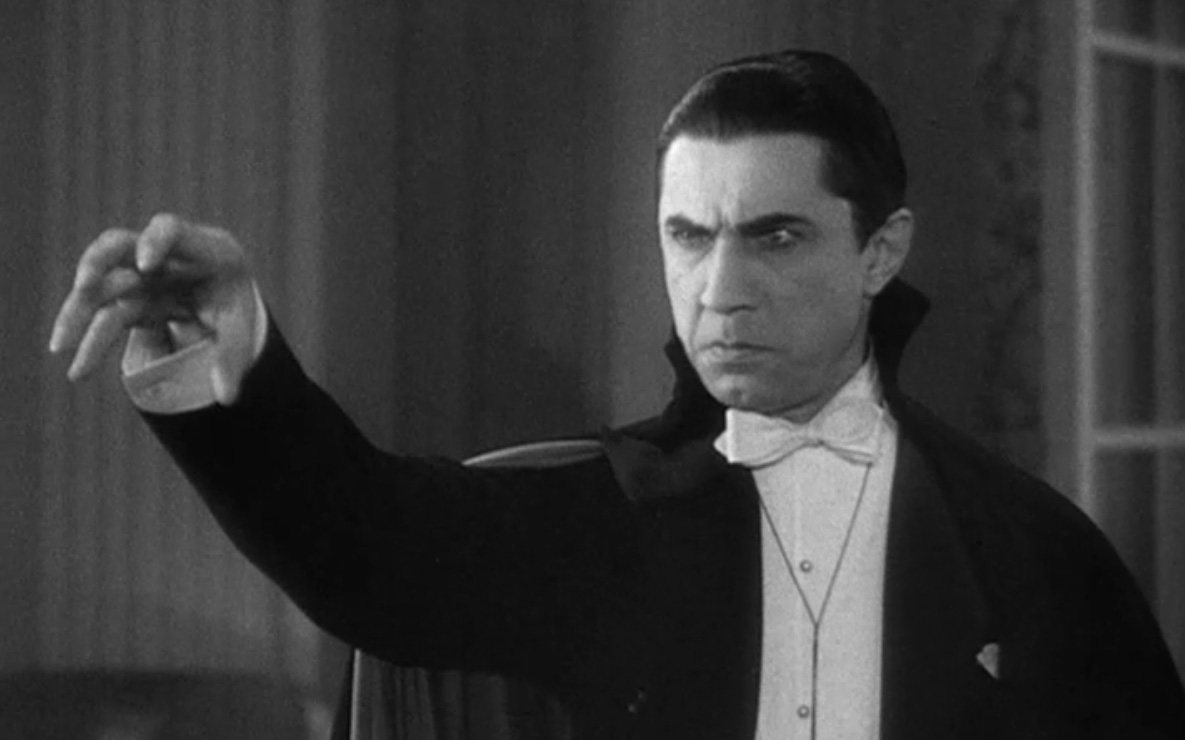
Killing the Undead

The undead are a favorite subject of movies, TV shows and literature. They're a special kind of threat to the heroes. Since they're already dead, it's not possible to kill them by ordinary means. They can only be killed with a ritual or a special weapon that can only be obtained after a long quest.

I believe mythical creatures, like werewolves, vampires, or the zoo of undead and spirit critters in a TV series like Supernatural are fictional representations of real world phenomenon: egregore. Egregore are entities that arise from otherwise unrelated constituent elements in the way that our consciousness seems to arise from the neurons of our brains, or in the as-yet-to-be understood relationship between our gut bacteria and our minds.

Since egregore are third things, and are ghost like, mere information and the flow of information, and not at all apparent in the matter from which they arise, the means of interacting with them are indirect and haphazard, and perhaps the effectiveness of these interactions can only be known ex post facto and through the interpretation of signs. Hence, we get rituals and hoodoo like Ouija boards and we get the fictional representations of vampires repelled by crosses and garlic, and killed with complex rituals and weapons.

Friday, March 25, 2016

Contracts with The Universe

A shamanic religion is for people who are living in nature, where her patterns and rhythms dictate daily life. Any rituals it has emerge from a certain simple un-mathematical, transcendent logic. The revealed religions of the western world are for city people, or people who are cogs in the machine of civilization. It's contractual. It has terms and conditions and fine print and exceptions. It's like a really bad cell phone plan.

Thursday, March 24, 2016

Corporate State versus Nations

Ruins of Ancient Dilmun
Since ancient times, even prior to recorded history, some people traveled over land and sea to trade. In many societies, merchants required the permission of rulers to engage in their business, and of course paid tax for the privilege. In other cases, the merchants formed the government or were part of the government, and of course, in some cases merchants toppled local governments to obtain access to finished trade goods, raw materials, or new markets for goods.

Trade, of course, isn't the production of goods. Trade, is what I think of as "a third thing", that which arises from others, and was of the god Hermes. While the trader sees himself as the spirit of fertility, helping to consummate the union of the sun and the earth, his interest and the producers and consumers interests are at best, only partly aligned, and in many cases, are in direct opposition. Consider the Chiquita Banana and Dole Fruit companies treatment of Honduras in the late 19th century. By controlling the land and sea routes and market for trade, they were able to install their own governments and extract the lion's share of the wealth from the banana business, and to acquire all the productive land.

For traders (hereafter sea people) well organized, even aggressive producers (land people) are anathema. Less wealth, or even in some draconian cases, no wealth can be extracted, because the land people judge the traders to be thieves or parasites, rather than providing a useful service.

Perhaps this conflict is coming to a boil in the United States, and in Europe as "nativists" are disparaged by some pundits, "free trade" agreements are excoriated by others for their bad terms, and the mass arrival of alien populations is viewed as an existential threat by locals.

The corporate society that's maturing in the western world views itself as distinct from its nation, that is has no political ties to the territories it happens to inhabit, nor the people who happen to live there. Arguably, it's the child of the sea, a descendant of the trading companies of the 18th and 19th centuries like the East India Company. For the corporates, land is a commodity to be bought and sold, and people are completely interchangeable economic creatures: employees or customers. Their beliefs, myths and history are unimportant. The laws and education system of the west are structured to produce corporate citizens: people with no ties and no memory.

It appears, though, that people are waking up, that is, becoming aware of their position, and rejecting the corporates. As of yet, there's no real idea of an alternative. Just as people who are skeptical of a globe (without knowing anything about the earth's geometry) decide the opposite must be true (a flat earth), people who are skeptical of corporate societies decide the opposite, e.g. a tribal society, must be ideal, or seek solace from politics in ideas of anarchy or voluntaryism.

The purpose of this blog is to perform an in vivo archaelogical dig on my own European American brain to try to scrape back the layers of false associations, to connect to the natural world, and to discover points of navigation that are true. A human is an animal, and it's our animal aspect that connects us to nature and to the land where we live. It's also our animal nature that connects us to one another, through family, or through friendship, or more tenuously through politics. The ancient habits of our ancestors shape who we are and what we think is important. We are the sunlight, dirt, water, and information that's been recycled countless times. We are severely limited, yet think we can imagine infinities and eternities.

Knowledge of who and what you are and your place in the world supersedes politics and the trivia of markets and trade. It's what makes it possible for a man or woman to have high regard for themselves and to see kings, tyrants, and politicians as petty conmen or people worthy to follow or believe in.

Monday, March 21, 2016

Power of Paradox Part Two

The senses generate signals from light, heat, pressure, smells. Our consciousness arises from a symphony of neurons sending electro-chemical messages inside the brain and from the record of ancient messages stored in our DNA. All these messages encode information about the outside world, that is, they create strings of symbols that represent the world.

These symbols represent the world, but of course, they aren't the world. They're something like a very incomplete, cartoonish, distorted model of the world. Think of really commonplace blunders that illustrate these models' failings: You believe you're at the top of a flight of steps when, in fact, there is one more so you bang your shin or trip. You imagine a mug of coffee is full, but it's actually totally empty, and your surprised arm flings it off the table.

Now imagine the absurdity of writing or reading a history book that tells the story of a nation over a thousand years. Next think about the hubris and lack of self-reflection of the economists or the sociologists maximizing productivity or some other such imaginary measure of hundreds or thousands, or even hundreds of millions of people, reducing their activity to some simplistic system of equations, that fail again and again to predict anything.

In other words, the full fidelity nature of the world is inconceivable. It's like the world is written in ancient Greek, but we only speak English. Perhaps there's actually no translation possible, though we don't stop trying.

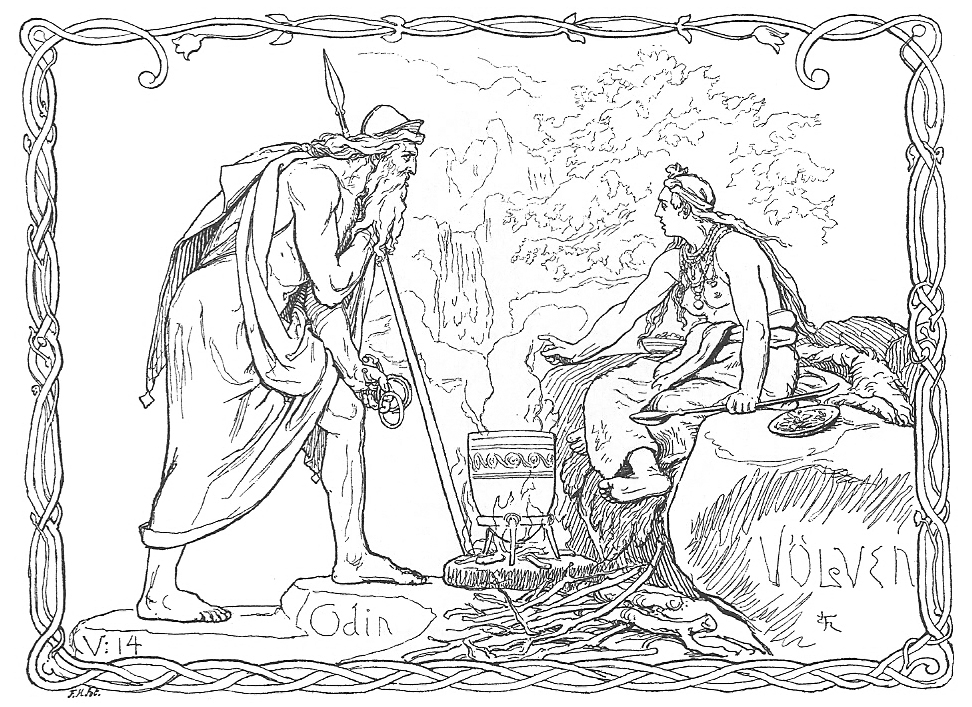
For the Norse, Odin's self sacrifice allowed him to discover the runes, that is, writing, and therefor the secrets of the universe. For the ancient Greeks, it was the discovery that music, geometry, could be expressed in the formal language of mathematics that opened the door to making the world rational. The Enlightenment and age of reason thinkers, and their philosophical children, carried that project forward toward the culminating idea that one could eventually build a computer that will perfectly model the universe.

In a lot of ways, the 20th century horror show of wars, genocides, and mass scale political murder was a reaction to crumbling models. Revealed religions were shown to be a hoax. Quantum mechanics showed classical physics has severe limits. Mathematicians showed formal systems are self referential. One reaction to these limits was not just to embrace them, but to deify them: if mankind can only believe in lies, let's not just believe them, let's act on those beliefs, especially when it comes to political murder, or crazy race theories! In the twenty-first century, those same ideas now get lipstick and wigs furnished by game theory, evolutionary biology, or economics.

Ideas about what it means to be a man or woman, good and evil don't seem to come from rational inquiry. We spy the stag of truth through the distant woods, but he's always just out of reach.